
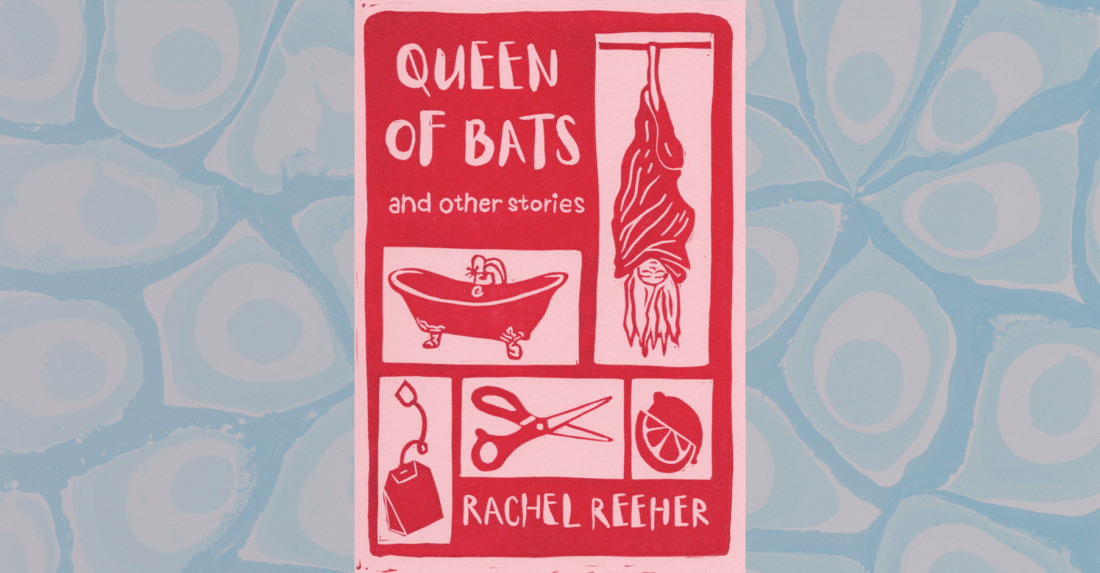
In Queen of Bats: And Other Stories, a tight, novella-length collection of just four short stories, debut author Rachel Reeher makes a statement on the expectations of womanhood and grief, undermining and calling into question conventions and tropes through an unabashed engagement with the absurd and the grotesque.
Two full-length stories alternate with brief pieces of microfiction. Each explores the fallout from a different form of grief: the impending loss of a sister, the unfolding of an illness, the end of a marriage, and the aftermath of a sexual assault. The stories delve deep into metaphor and symbolism, blurring the lines of reality and sometimes stepping over into magical realism.
In “Tea Party,” for instance, a woman with an unnamed illness takes the beauty ritual of an herbal bath to an extreme, soaking in the tea bag-blackened water around the clock to the point “her fingers droop like balloons” and her toes become “bloated,” until she is so saturated she herself becomes a vessel of tasseography, mumbling through the tea leaves what her sister can only hope is some ultimate truth. The tropes of beauty surface again in the collection’s final story, a brief piece entitled “I Cut My Hair [Because of a Boy],” in which the protagonist grapples with the “liability of beauty” after a sexual assault by ridding herself of her hair, like “a serpent, a scaled reptile slipping from its skin,” until she emerges “a new animal.” In this story and in others, animals and the natural world continually collide with the tidiness of domesticity and sanctioned beauty.
The narrator of the titular story, “Queen of Bats,” becomes fascinated with a bat, a creature typically cast as gross and eerie. But this woman, on the heels of being left by her husband and grappling with a lifelong feeling of exclusion from her family, particularly her sister, instead experiences a feeling of a kinship with a bat, which has a rare condition and as such is “orphaned, abandoned for its defect, its genetic divergence.” For her, this animal she sees in a nature documentary becomes a “beacon of hope” as she attempts to bake her way through her feelings post-divorce by embedding her husband’s possessions into each baked good she makes.
The baking itself is another way that Reeher artfully turns homemaking and so-called “womanly” activities on their head. Here, the narrator would “bake enough for a block party and keep it all to [her]self,” sometimes even waiting to get rid of the excess “until the flies appeared or the edges turned green and powdery” — an act of domestic defiance rather than domesticity.
Haphazard home-making becomes intertwined with grief in the first story of the collection as well. In “God Is In Your Body,” the narrator pours energy into revivifying the old house that she and her sister, Gem, are staying in while Gem endures the final days of a terminal illness. The narrator refinishes the dining room table, but only to the point that “if you squinted, it was perfect,” and in an attempt to remove the old wallpaper, a task she completes “in her underwear,” she leaves the walls “gashed.”
These moments, alongside many others throughout the collection, underscores the gap that often exists between appearance and reality, or what something seems to be versus what it actually is. You can skim along on the surface of norms and platitudes, keeping things just-so, but only for so long until reality inevitably breaks through, at which point the question becomes: Which one is really absurd, the pretense or the truth? Grief, it seems, is a common point during which this question crystallizes, and during which we can manifest something closer to the truth, or at least to our version of it.
FICTION
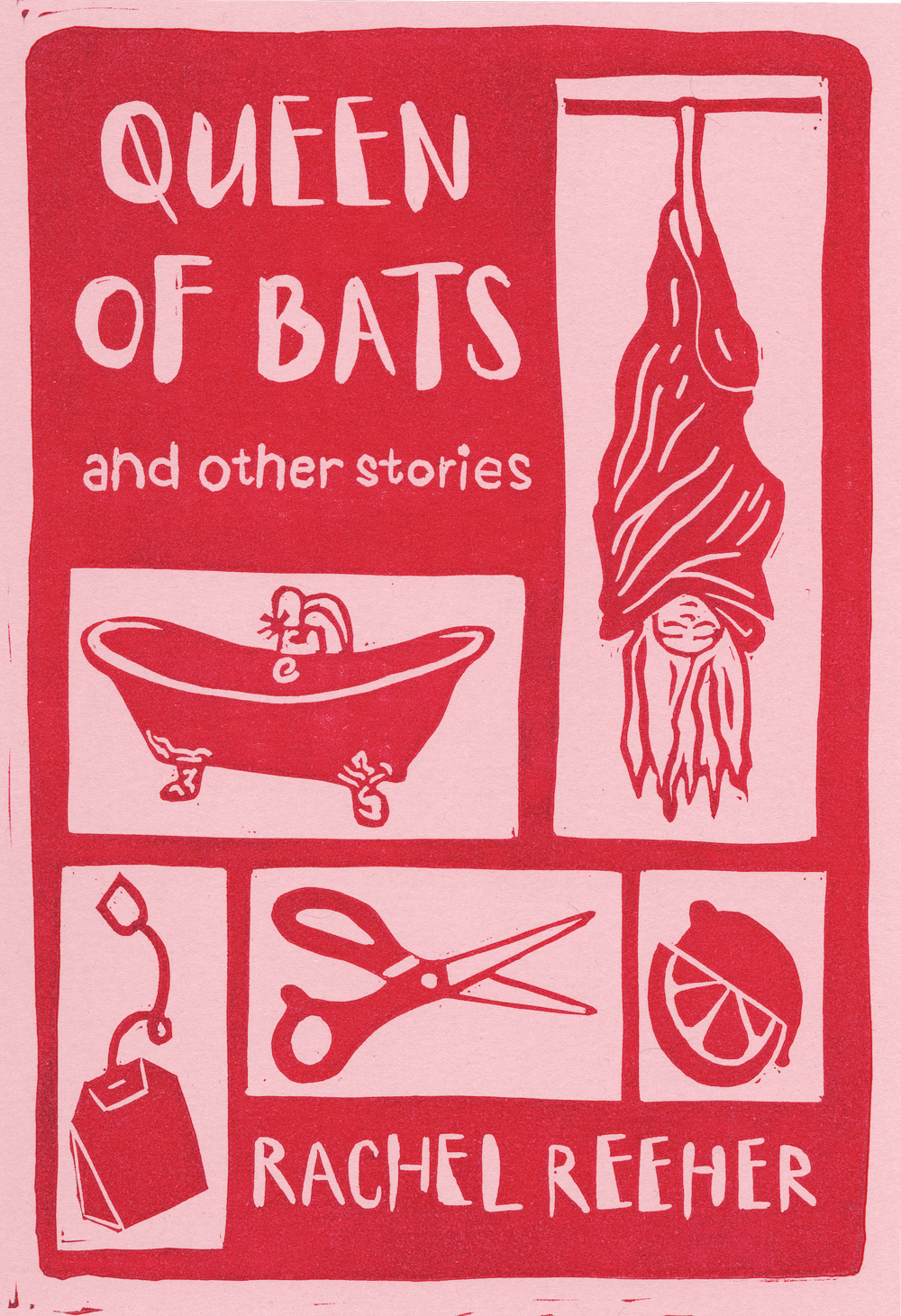
Queen of Bats: And Other Stories
Rachel Reeher
Susquehanna University Press
Published March 31, 2026


